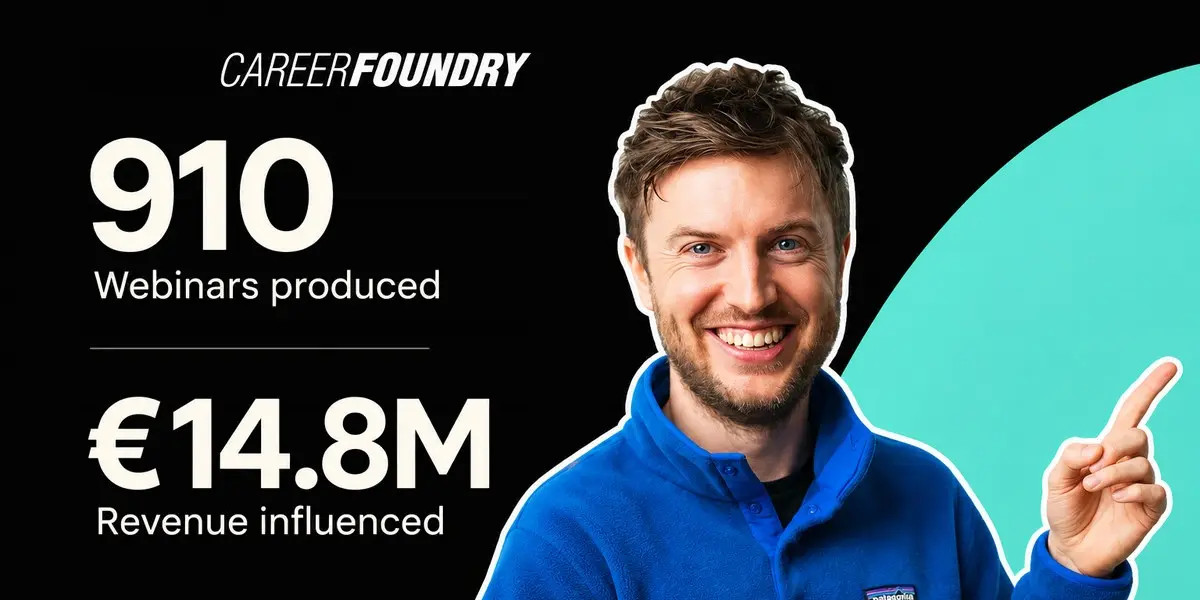
How 910 Webinars Contributed to €14.8M in Revenue
Four years, 230,000+ registrations and a webinar channel that helped shorten an eight-month buying journey to six weeks.
Nobody changes careers because of a 15-second ad.
Changing careers means months of studying, thousands in tuition fees and a leap into an entirely new profession. Before making that commitment, people have questions.
Can I actually do this? Will I find a job afterwards? What support will I get? Am I too old to start again?
At CareerFoundry, our webinars gave prospective students somewhere to ask those questions. They could meet instructors, hear from graduates, try new skills and speak directly to the people behind the programme.
For many, those 50 minutes helped them decide whether a career change was right for them.
Four years, 910 webinars
From 2022 to 2026, I ran CareerFoundry's global webinar and events channel.
CareerFoundry was one of Europe's largest EdTech bootcamps, with students across North America and around the world. We delivered four or five live sessions every week, covering seven or eight subject areas.
Over four years, the channel delivered:
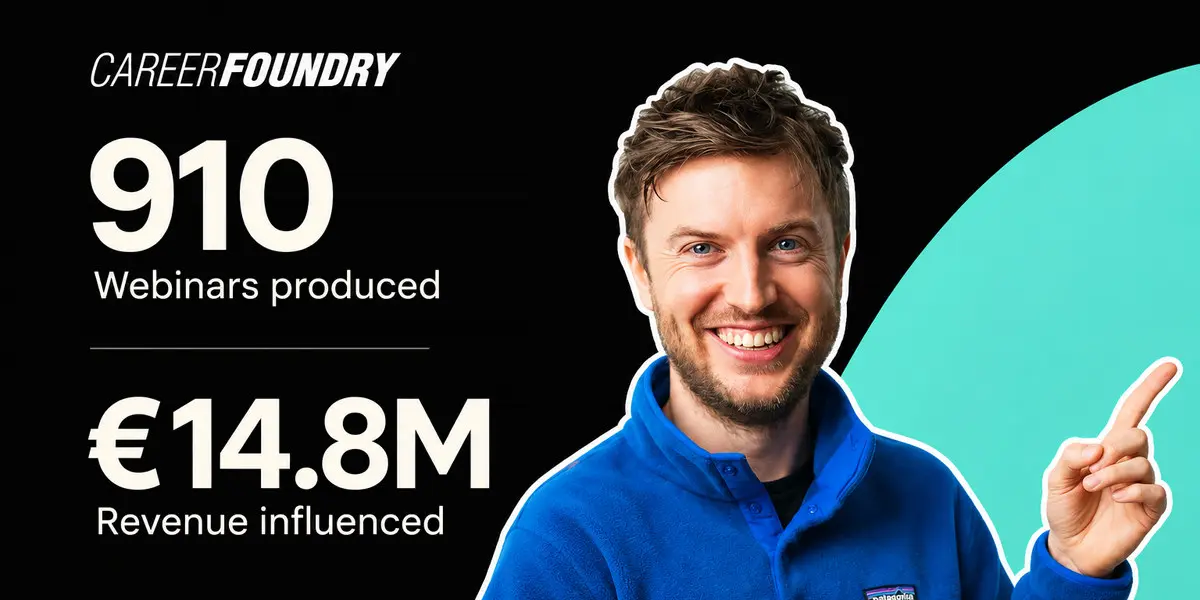
910 live webinars
236,950 registrations from 215 countries
50,819 live attendees
5,753 sales meetings booked on the day of an event or the following day
2,966 attributed enrolments
€14.8 million in attributable revenue
A small team in Berlin managed the programme, working closely with sales, social media and content marketing.
Webinars became a regular part of how CareerFoundry attracted prospective students, answered their questions and helped them make a decision.
The weekly engine
Our core information sessions ran under one name: Become. The promise was simple: become a UX/UI designer, a data analyst or a web developer with CareerFoundry.
These sessions generated more than 95,000 registrations and attracted over 18,000 live attendees. The UX/UI design session alone ran 116 times.
We also delivered 66 sessions explaining the Bildungsgutschein, the German state-funded training voucher, and how eligible students could study with CareerFoundry without paying tuition themselves.
Our regular information sessions were produced in-house, using CareerFoundry instructors and team members.
I developed presentations, trained speakers, created scholarship and discount offers, prepared the run of show and hosted many of the sessions myself.
We kept the format consistent enough to run several times a week, while adapting the content to different subjects and audiences.
That meant we could deliver at scale without starting from scratch every time.
Why the second webinar mattered
One finding changed how we approached the programme.
Prospective students who attended a second event, either a practical workshop or a fireside chat with a brand ambassador, converted at twice the rate of those who attended only an information session.
Rather than expecting one webinar to answer every question, we gave people different ways to continue the conversation.
Someone ready to enrol could use an event discount. Someone who wanted to talk things through could book a sales call. Others could join another webinar to explore the subject in more depth.
We developed three main formats for different audiences.
Information sessions were for people actively considering a career change. They wanted to understand the courses, meet instructors and learn about career opportunities.
Practical workshops helped people who were interested but needed more confidence. In sessions such as Python: Beginner to Advanced in One Hour, participants could try the skills themselves rather than just hear about them.
Expert sessions introduced CareerFoundry to new audiences through established creators and guest speakers.
One example was a live SQL workshop with Alex the Analyst, a data analytics YouTuber whose audience we couldn't easily reach through our own channels.
The session attracted 1,274 registrations, with 461 people staying for the full hour. More than 50 enrolments followed, and the recording has since passed 246,000 views.
It introduced CareerFoundry to a new audience, delivered useful content and created a recording that continued attracting viewers long after the event.
One webinar couldn't do everything. Giving people a reason to come back made the whole programme more useful.
What attendance was worth
Registrations mattered. But getting people into the live session mattered more.
People who attended a webinar were more than three times as likely to book a sales meeting or enrol as those who registered but didn't show up.
Meeting conversion was 4.8% among attendees, compared with 1.4% among no-shows. Enrolment conversion followed a similar pattern: 3.0% versus 0.9%.
So we focused on the details that influenced attendance. We shortened the time between registration and the event, improved reminder emails and tested different days and times.
Across 910 webinars, our overall attendance rate was 21%.
But attendance wasn't the only measure of success.
Practical workshops achieved around 30% attendance, compared with 19% for information sessions. Yet the information sessions contributed more directly to revenue because their audiences were generally closer to making a purchase decision.
A full room wasn't necessarily a better commercial result. What mattered was who attended and what happened next.
From eight months to six weeks
The impact also showed up in the sales process.
Sales calls following a webinar closed at rates 30% higher than those from cold pipeline.
We also saw how the right combination of webinars could help people make decisions more quickly.
For one of our slower-moving audiences, combining relevant webinars with the existing email nurture sequence helped shorten an eight-month decision-making journey to approximately six weeks.
It wasn't about pushing people to enrol before they were ready. It was about giving them the information they needed to make a decision.
The difference wasn't more leads. It was making better use of the interest we already had.
The live hour was only part of the work
A webinar's impact started well before the event itself.
We promoted sessions through segmented email campaigns, relevant blog posts, social media and guest speakers. Selected events also streamed live to LinkedIn and YouTube to reach people beyond our registration lists.
Afterwards, recordings became shorter videos, blog content, nurture emails and resources the sales team could share with prospective students.
Follow-up was just as important.
Within 24 hours, attendees and no-shows received different emails with relevant next steps. Participants with outstanding questions received personal replies, while those showing clear buying intent were connected with sales, often that same afternoon.
The live Q&A was especially important. Questions about age, career prospects or the realities of retraining could influence someone's decision, so we prepared speakers to answer them honestly and clearly.
The webinar might last 50 minutes. The preparation, content and follow-up kept working long afterwards.
What it takes to build a webinar channel
Looking back at four years and 910 webinars, one thing stands out: the live event was never the whole job.
It took a regular programme, trained speakers, different formats for different audiences and a clear next step after every session.
It also meant working closely with sales and having the tracking in place to see which webinars contributed to meetings, enrolments and revenue.
The technology was the easy part. Getting the people, content, promotion and follow-up working together was where most of the effort went.
That's what I now bring to Webinar Rebels. I've built and run a webinar channel at scale, and I know what it takes to make one work.
If you're thinking about webinars, or already running them and wondering what you could do better, let's talk.
Thirty minutes, and we'll look at what makes sense for your business. If it's not a fit, I'll say so. You'll still leave with something useful.
CareerFoundry figures are based on internal events reporting from 2022–2026. Revenue attribution is based on CRM reporting.
I build webinar channels for startups and scale-ups that turn leads into revenue. If you'd like one for your business, book a free 30-minute call. If it's not a fit, I'll say so. You'll still leave with something useful.
CareerFoundry figures are based on internal events reporting from 2022–2026. Industry comparison figures are based on Zoom's webinar statistics roundup, citing TwentyThree and Banzai.